
The Influence of Architectural Form in My Work
My approach to jewelry is deeply rooted in my early experience within architecture, where form, material, and context were never separate considerations but part of a continuous dialogue.
Working within the disciplined, contemplative, immersive environment of Claudio Silvestrin Architects introduced me to a language of minimalism that was not about absence, but about the insistence that every line, surface, and proportion carry weight with the ultimate purpose of awakening people’s sensitivity.
This architectural foundation continues to inform how I conceive of objects. Rather than approaching jewelry as decoration, I see it as a form of spatial practice in miniature. Each piece is an exploration of balance, tension, and void — ideas that originate in architectural thinking but translate naturally into the scale of the body. The influence of siting, in particular, remains significant: just as a building responds to its environment, a piece of jewelry must respond to the body, to movement, and to light.
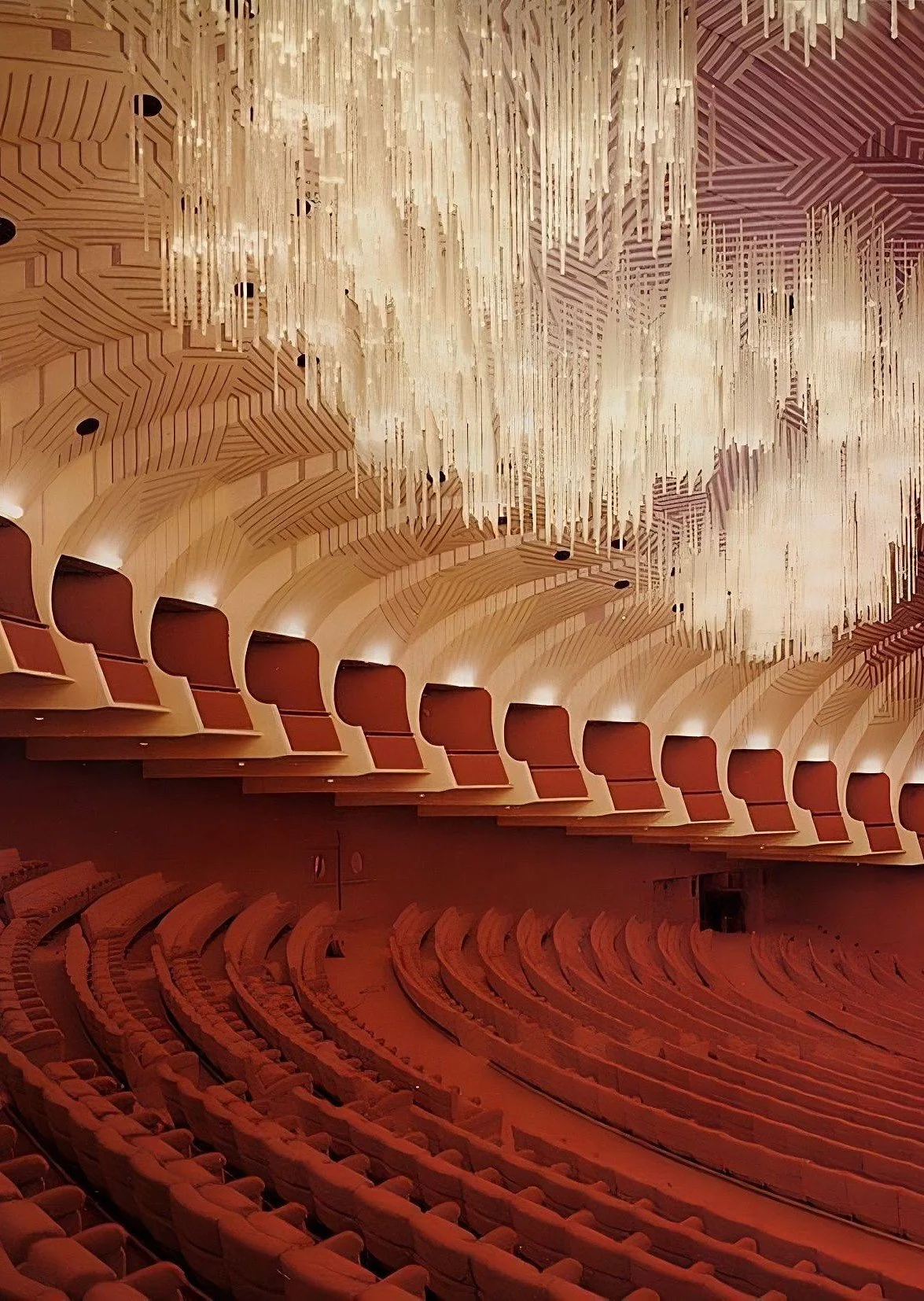
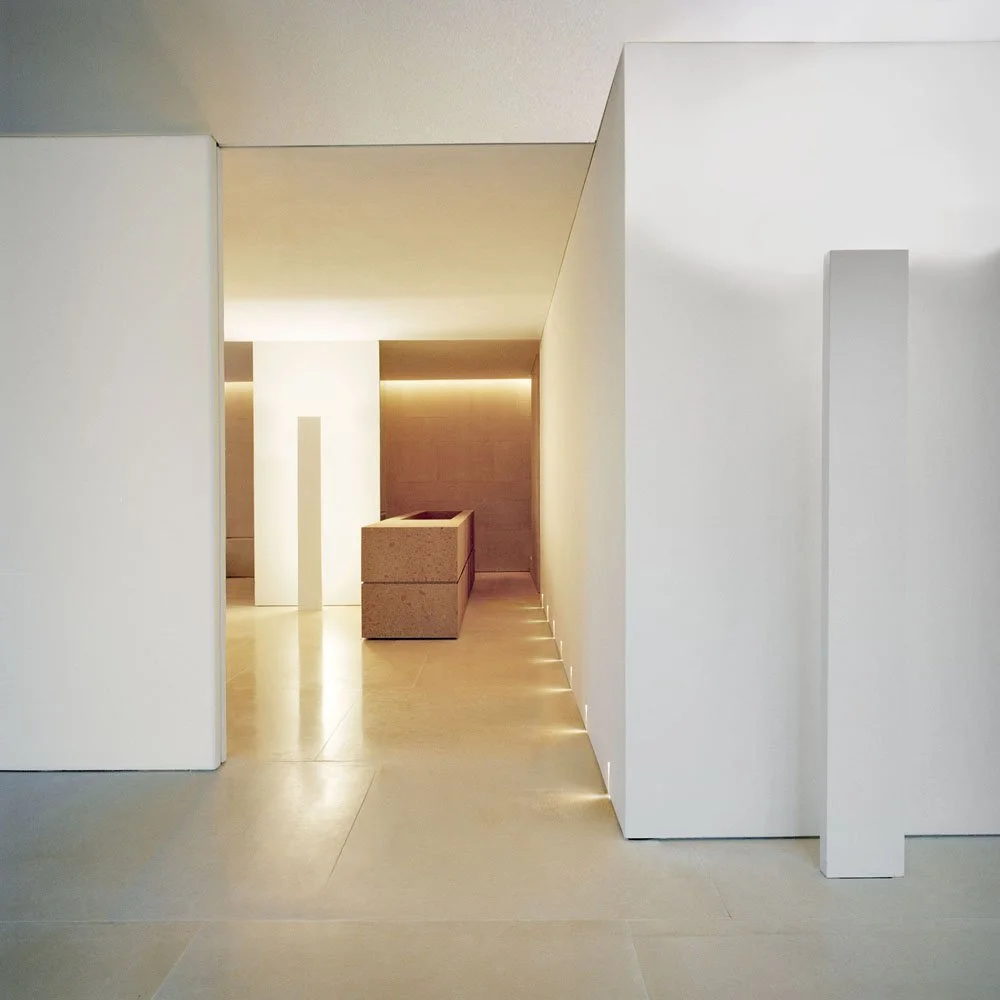
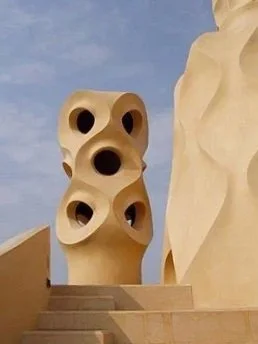
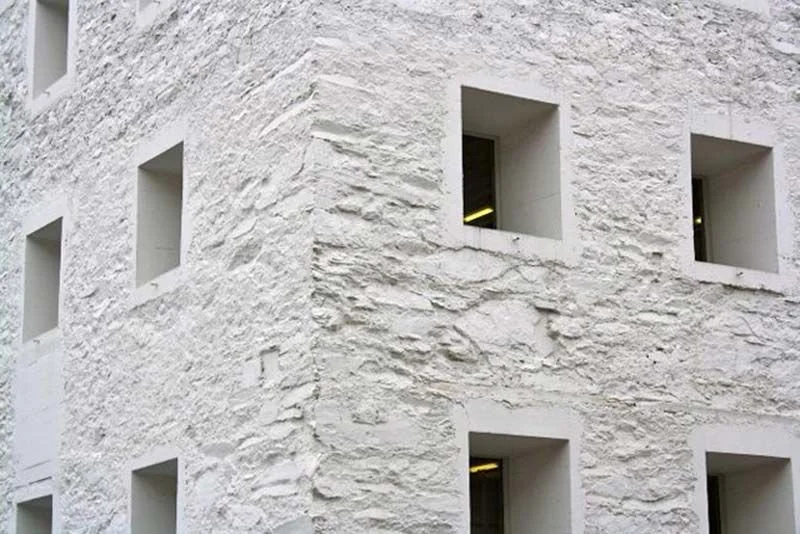
Above: Carlo MollinoTeatro Regio, Torino; Claudio SilvestrinAppartment in NY; Gaudí Casa Milà; Valerio Olgiati_Museum Yellow House
Minimalism, as I encountered it, was never purely aesthetic. It was philosophical — a way of refining form until only what is essential remains. This process of reduction is central to my work. Organic curves, asymmetries, and sculptural silhouettes emerge not from excess, but from a careful removal of the unnecessary. The resulting forms aim to feel inevitable rather than designed, as though they could not exist in any other way.
Materiality also plays a critical role. Silver and brass are not neutral carriers of form; they possess their own character, their own capacity to age and transform. This sensitivity to material echoes architectural concerns with stone, concrete, and light — where texture and time become part of the work itself. The patina of brass, for instance, introduces a temporal dimension, allowing each piece to evolve uniquely with its wearer.
Ultimately, my work exists at the intersection of object and presence. It is less concerned with ornamentation and more with creating forms that hold space — quietly but deliberately. In this sense, the influence of architecture is not simply visual, but conceptual. It shapes how I think, how I edit, and how I define the relationship between form, body, and meaning.